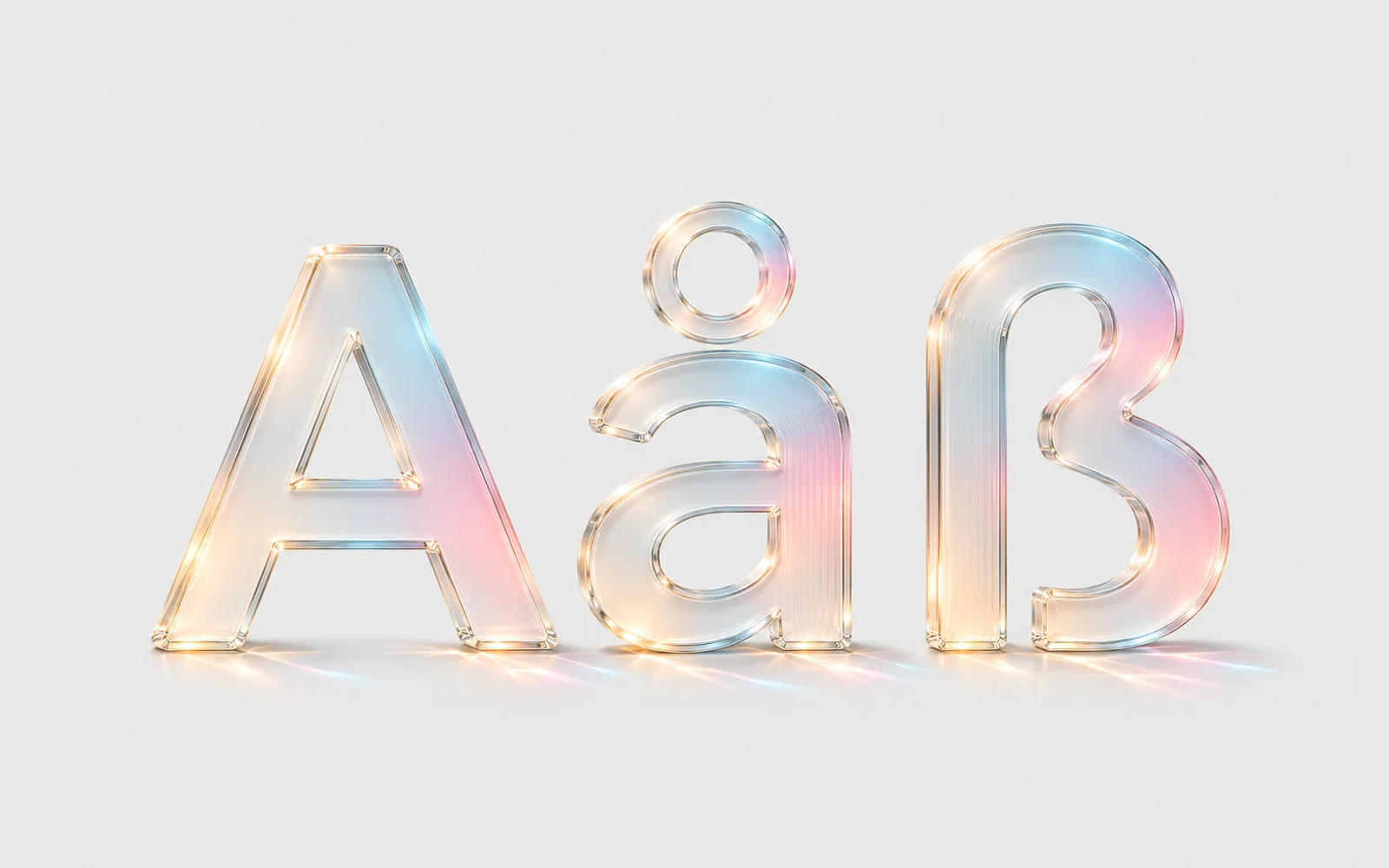
Danish, German and English do not take up the same room. A layout that only works in one of them is not finished.
Most of our clients publish in two or three languages. The design is usually drawn in one of them, and the others are poured in afterwards. That is where layouts break.
The words are different lengths
German runs about a third longer than English. Danish compounds do not break where you expect. A navigation label that is six letters in English can be nineteen in German.
We now set every layout in its longest language first. If the German fits, everything fits.
Three rules we keep
- No fixed widths on anything that holds a word. Buttons, tabs and labels grow with their text.
- Hyphenation is set per language. The browser does this well when the page says which language it is in.
- Headlines get a second line. A design that depends on a headline staying on one line will not survive translation.
A typeface for all three
Not every typeface has a good ø or a good ß. We test the full character set before a family goes anywhere near a design, including the capital forms, which are the ones most often missing.
It is slower at the start. It saves the week before launch.